Mercury: When Things Make Sense
Someone has been explaining something for ages. You understand every word. You could repeat most of the conversation. Yet the point still escapes you. Then they reach for a piece of paper, draw two circles, remind you of something that happened to you, or simply try putting it another way. And you say, “Ah. Now I see what you mean.”
Something important has happened between the first explanation and that small reply. A thought that belonged to someone else has become available to you. You can ask questions about it, disagree with it, explain it to another person. You may even discover something the original speaker had not quite worked out.
This gives us a way into Mercury. Astrology associates it with speech, thought, learning, writing, trade and travel. At first, that seems a curious collection. What connects a school exercise, a diplomatic mission, a well-timed joke and a conversation across a shop counter? In each case, something crosses a gap: between people, between a thing and its description, between a familiar example and a situation we have never encountered.
In the reading proposed here, Mercury allows what we have understood to survive that crossing. The words may change. The listener may be someone else. The circumstances may be unfamiliar. Yet the crucial distinction remains recognisable: this is what we are talking about, and this is how it differs from something that only looks similar.
Perhaps that is why understanding can feel like a small release. Until that moment, we had to hold on to someone else’s wording. Now we can speak for ourselves.
Messenger, Interpreter and Trickster
Mercury’s story began long before anyone spoke of an information society. In the Babylonian tradition, the planet was associated with Nabu, god of writing and wisdom, patron of scribes. It is a striking image: someone sits with a clay tablet, making a record that may travel to a place they will never see. The words outlive the voice that spoke them.
Writing allows an order to be passed on, an account to be kept, a promise to be revisited. What people said yesterday can be set beside what they do today. Marks pressed into clay begin to play a part in human relationships.
In Greece, Hermes enters the story. In the Homeric hymn, he has barely been born before he starts getting up to thoroughly grown-up mischief: making a lyre, stealing Apollo’s cattle, confusing their tracks and trying to persuade everyone that he is just an innocent baby. The lyre eventually passes to Apollo, and the quarrel ends in an exchange and a reconciliation.
Hermes understands remarkably well how one thing can stand for another. Tracks tell a story about a journey, so they can be made to tell the wrong story. Helplessness inspires trust, so helplessness can be performed. The sound of an instrument can captivate an angry listener and give the encounter a different course.
There is more to this than swift feet. Hermes knows how to handle the signs by which people judge what is happening.
In Plato’s Cratylus, Socrates gathers interpretation, messenger work, trade, theft and deception around Hermes, noting their common connection with speech. The same human gift can explain something obscure or make something perfectly clear seem hopelessly confused. Words can lead us towards what they describe, or lead us away from it.
The ancient pairing of wisdom and trickery catches a subtle truth about us. To distort another person’s thought convincingly, you often have to understand it very well. The intermediary knows both sides of the exchange and acquires a particular kind of power: to preserve a distinction, soften it, shift the emphasis or quietly drop a condition. An “if” disappears from a promise as it is passed along, and the listener receives a different version of the future.
When we move from myth to the astrological writings of antiquity, Mercury becomes part of a more detailed account of the human mind. In the second century, Ptolemy associated Mercury with the reasoning side of mental life, while connecting perception and sensory response primarily with the Moon. Having an experience was already being distinguished from making sense of it: recognising what has happened to us and finding a way to say it.
Many centuries later, in the seventeenth century, William Lilly described a Mercury far more wide-ranging than the one we sometimes meet in short modern guides. Its occupations included scholarship, writing, mathematics, teaching, poetry, commerce and diplomacy. At its best, Mercury could learn with scarcely a teacher, investigate what was hidden, reason and invent. At its worst, it became a chatterbox, a fraud or a know-it-all with little sound knowledge behind the talk.
The older Mercury encompassed serious inquiry as well as empty busyness. Superficiality was one of its possibilities, not the inevitable price of a quick mind.
Popular accounts today often put communication style first. Does someone speak quickly or slowly? Do they enjoy detail? Are they good at meeting people? How do they learn and remember? Joanna Watters, for example, brings together two familiar sides of Mercury: Gemini’s communication and Virgo’s ability to analyse, define and distinguish. Cafe Astrology adds the sorting of impressions and the coordination of different pieces of information to the exchange of thoughts.
The heavenly scribe and messenger of the gods gradually take their place beside our phones, work emails and school exercise books. But the underlying question has not changed. What happened to the thought on its way across? Was it heard, understood, altered—or was a message simply received?
What the Magician Does
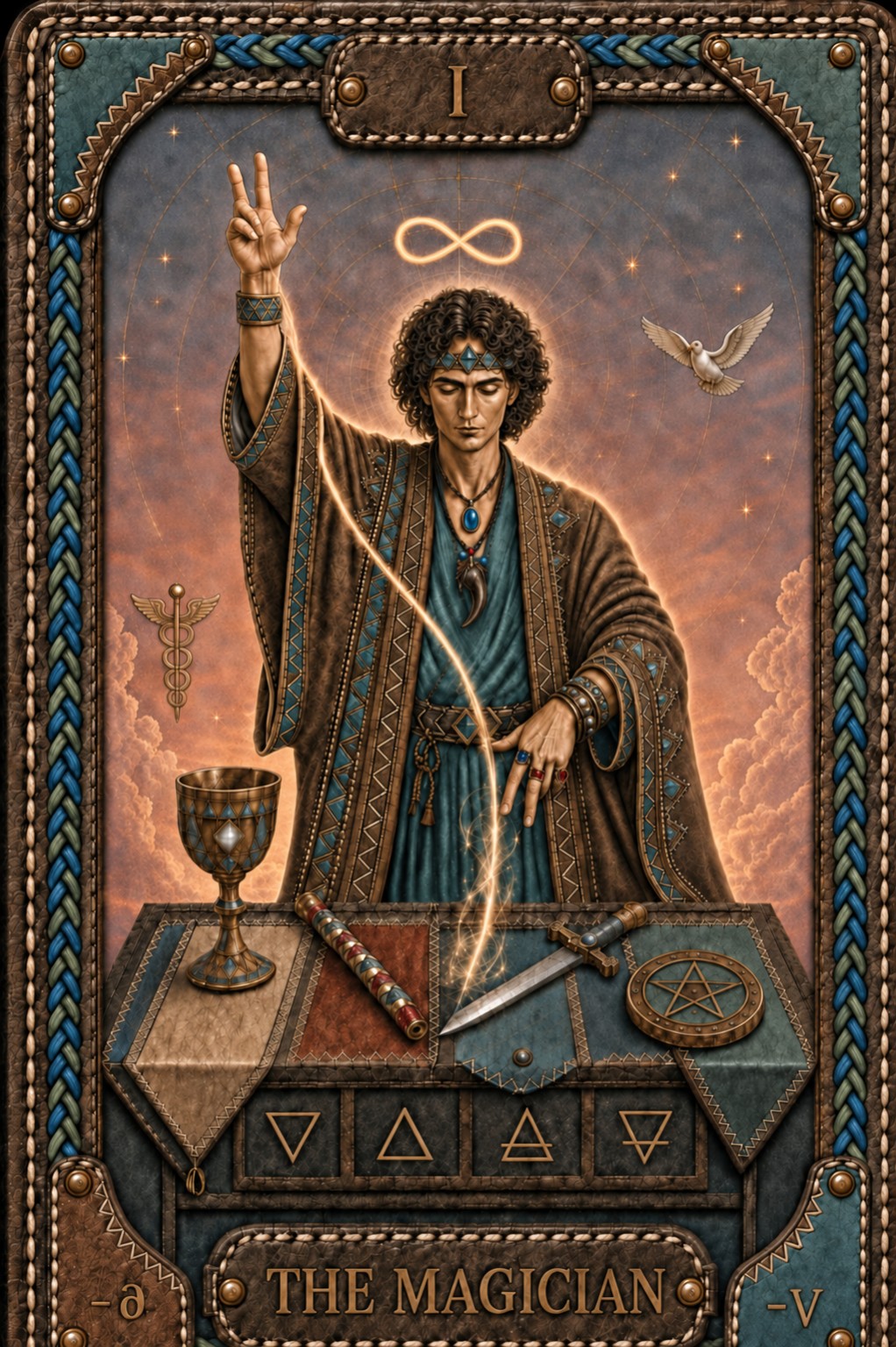
In the Tarot language used here, Mercury corresponds to the Magician. The names clustered around this figure are suggestive: magician, conjurer, juggler. They preserve both sides of Hermes: knowledge and sleight of hand, explanation and misdirection.
In the familiar Waite image, the objects of the four suits lie before the Magician. One hand holds a wand aloft; the other points downwards. For our purposes, the important image is one of mediation: someone stands between different realms and can establish a connection between them.
Now imagine an ordinary lesson. A teacher puts a handful of buttons on the table, moves them apart, divides them into groups and gathers them up again. At first, the child watches the hands. Then the child notices that the number of buttons has stayed the same. Next time, the objects may be apples or dots on a page, but the relationship can still be recognised.
The objects help make a thought visible. A gesture, an analogy, a diagram, a tune or a well-judged question can do the same. Sometimes a good drawing explains more than a page of definitions. Sometimes a single word gives a scattered set of impressions a clear place in our minds.
A conjurer uses similar means to conceal the connection. The audience sees individual movements but misses the one on which the outcome depends. Attention is directed towards what looks convincing. The crucial move happens in plain sight and remains unexplained.
Knowing how to use signs does not, by itself, tell us whom or what to serve. A mistaken idea can be transmitted accurately. We can explain someone’s position clearly while disagreeing with every word of it. Understanding lets us establish what is being claimed. Whether the claim is true, and what we intend to do about it, remain further questions.
Mercurial clarity can therefore be a modest achievement. It does not always end in a triumphant “I understand everything.” Sometimes, after a long conversation, a person can finally say exactly what they still do not know.
The Learner Who Knows How to Ask
In Astrology 2.0, Pavel Andreev connects Mercury with the ability to ask questions, take in information, break down what we hear and reproduce what we have learnt. Bioastrology 2.0 gives it a narrower description: Mercury is “a transmitter and a copyist”. It handles facts, while the author assigns more complex creative tasks to other planets.
There is a useful insight behind that division. It is easy to bundle every activity of the mind into a single thing called intelligence and stop noticing how many different achievements we describe as understanding. A pupil repeats a proof. A teacher finds an explanation. A researcher poses a new question. Someone finally hears what their partner has been trying to tell them. From the outside, all four involve thinking and speaking. What they accomplish is different.
Yet Andreev’s own account shows that a living Mercury cannot be confined to copying. In a chapter on the ways school can suppress its activity, he objects to treating the transcription of a textbook as a substitute for thought. He discusses analysis, the use of sources, independent questions and the pupil’s right to disagree. Elsewhere in the book, learning a skill involves watching a master, making an attempt, getting it wrong and correcting the mistake.
Anyone who has taught anything will recognise the distinction. One person can repeat an explanation flawlessly and be lost as soon as the problem changes slightly. Another stumbles, forgets a term, struggles to find the words—and still gets to grips with a new example.
In our model, the second person shows what Mercury has achieved. The learner has retained the distinction the explanation was meant to convey. They recognise it in a different form and can show where the old approach still works and where it needs refining.
This often takes ingenuity. A translator has to rebuild a sentence. A teacher has to find an example. Someone trying to describe their feelings has to abandon the familiar “I’m fine” and look for words that are more exact. A new form of expression carries something that was already there to be understood.
The exchange need not involve another person. We reread a note and suddenly see why it mattered to us yesterday. We try a familiar rule on an unfamiliar case. We explain a thought to ourselves and discover the point at which a confident phrase was concealing a gap.
Mercury retains a learner’s openness even in someone with years of experience. “Show me again.” “Does the same thing apply here?” “Have I understood you?” Such questions allow knowledge to move on instead of hardening into a set of untouchable words.
Marina Explains a Pause
In the essays on Jupiter and Neptune, we met Marina, a pianist. After an injury, she is looking for another way to keep music in her life and gradually finds it through teaching. Let us return to her with another imagined lesson.
A pupil plays a passage. All the notes are there, but the music seems determined to finish before it has had its say. Marina asks him not to rush. He slows the whole thing down, carefully stretching every note. It is slower, certainly, but something is still missing.
Marina asks, “You’re coming?” Then she waits for an answer. Next she says the very same words as a confident statement: “You’re coming.” In the first case, the silence is offered to the other person: it is their turn to reply. In the second, she has simply finished her thought.
She has not changed a word. Intonation has changed the shape of the conversation. The question creates an expectation; the statement comes to a full stop. Marina invites the pupil to hear a similar difference in the music. He has been playing as though the thought were complete at a point where it still needed something to follow. Slowing down could not solve that. However long he made the notes, he was still putting the full stop too soon.
They return to the passage. This time, he tries playing the phrase so that the next sound feels necessary. The pause begins to mean something too: it can hold the expectation of a musical answer. Marina may demonstrate with her voice, play a short fragment or ask him to listen to a recording. Gradually, he begins to hear the difference she means.
At the next lesson, he has a different piece in front of him. Marina says nothing. He stops of his own accord. “This hasn’t finished yet either, has it?”
That is the small moment we have been working towards. His understanding has survived a change of piece. An explanation drawn from ordinary conversation helped him hear a musical distinction, then recognise it without the original prompt.
Neptune was at work in Marina’s recognition that teaching could continue her life in music. Jupiter appeared as that life gained room to grow: pupils, time, work she could do. Mercury becomes visible within a single explanation, when something she can hear becomes something another person can hear as well.
The music may still be far from perfect. His fingers may not yet be able to do what his ear asks of them. But he knows what he is trying to achieve and can hear the difference between attempts. Further work now has something to build on.
Twelve Ways of Understanding
In every sign, Mercury does the same essential work: it carries a distinction we have already noticed through a change of words, listener or circumstances. Another person needs to be able to work with it independently—in their own words, with their own material, in a different setting. Sometimes we become that other listener ourselves: we return to a note we wrote, recognise a familiar thought in an unfamiliar example, or find a more accurate way to express it. In our model, these twelve ways of conveying understanding are called twelve languages.
Any of them can be spoken in English, French or another language. One person uses different ways of explaining according to what needs to be understood. Sometimes they clarify the status of an event. Sometimes they reflect a speaker’s thought back to them. Sometimes they show which conditions a result depends on. Each brings a different set of relationships into view.
This is what we mean by the geometry of context: who stands in relation to whom, what depends on what, where a boundary falls and what remains open to continuation. Speech makes that geometry audible. “Have we actually decided?” picks out the boundary between discussion and decision. “What must we keep the same to get that result again?” connects conditions with a repeatable outcome. “Have I understood you correctly?” leaves the other person free to correct our reflection.
Words matter, but so does the way a sentence is put together: a question, a condition, the distribution of “I”, “you” and “we”, the order of its parts, the tone of voice. No single word identifies a language. “Always” does not explain how to reproduce a result, and a reference to the future does not supply a direction. We need to hear which relationship the speaker is making clear and what it will allow the listener to distinguish.
The following stories explore these languages. They develop the reading of Mercury proposed here while giving familiar astrological descriptions a more particular meaning. Throughout, understanding faces the same test: can the other person apply the distinction to a case that was not included in the explanation?
Mercury in Aries
The language of events
A group of people are planning to open a theatre studio. One is discussing names. Another has already started inviting friends to classes. A third thinks they are all still just floating ideas. The conversation is lively, but each person is living at a different point in the story.
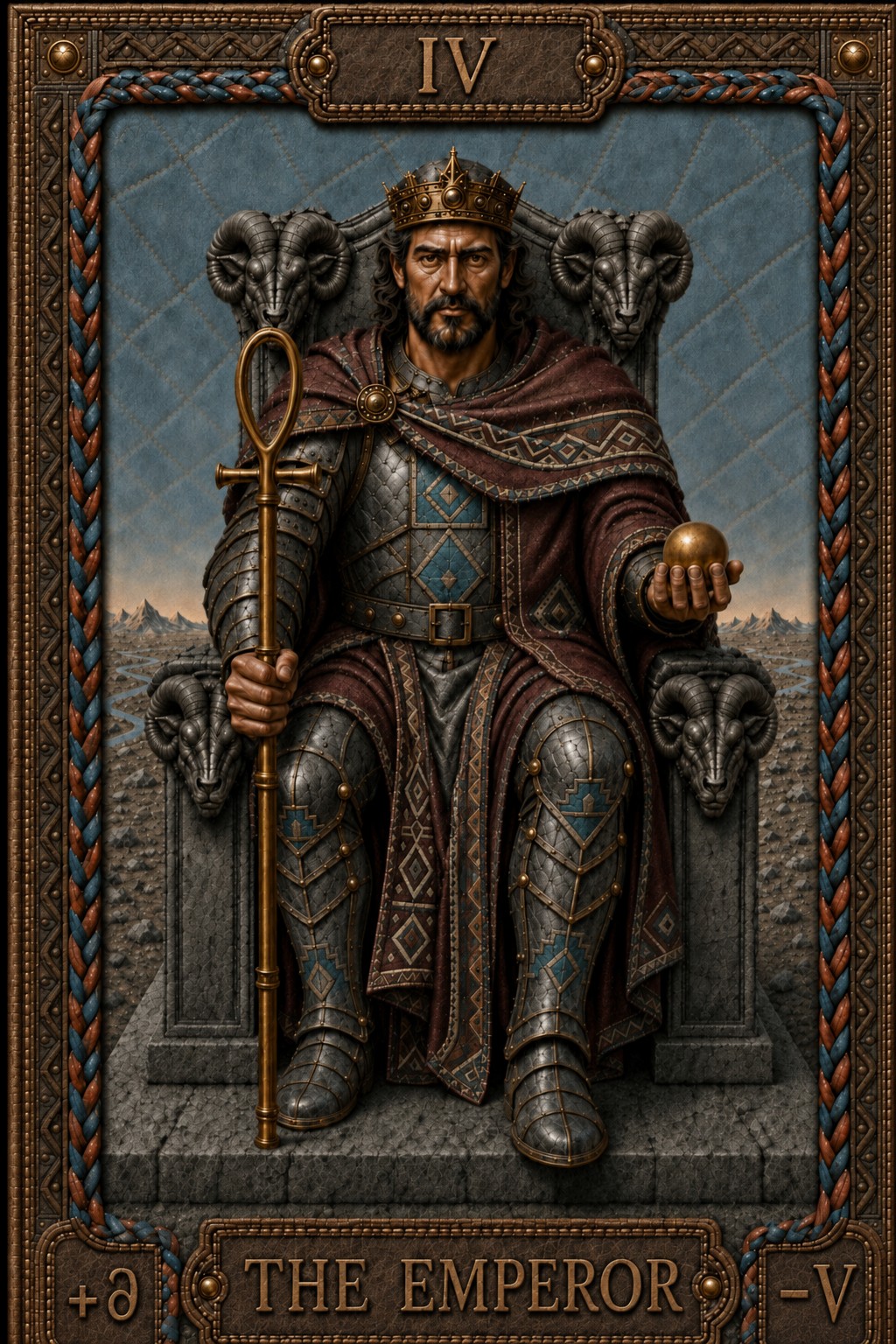
Then someone asks a short question: “Have we actually agreed to go ahead?” It turns out they have only been offered a viewing of the premises. The teacher has not replied. Tomorrow’s appointment is a meeting of the organisers. The studio is not opening yet. What begins tomorrow is the preparation, with specific tasks people are willing to take on.
The language of events clarifies the status of what is happening. What is merely possible? What has been proposed, decided or already put into practice? Here, the important boundaries separate different states of the same undertaking. People can use the same words while believing they stand on opposite sides of one of those boundaries.
That makes questions such as these especially valuable: “Is that a suggestion or a decision?” “Are you promising, or making a prediction?” “What has actually happened?” “Still” and “already”, a questioning voice and a statement of fact, help locate the event. Mercury makes an existing distinction clear to those involved. Someone who has understood it can bring a newcomer up to date without sending them to a class that does not yet exist.
Popular descriptions often emphasise speed, directness and sharpness of speech. Brevity really can help in a conversation like this. One timely clarification may prevent a long chain of misunderstandings. But a quick reply can also get ahead of events: a wish has already sounded like a promise, a discussion like a decision.
The Emperor brings us back to the moment when something acquires a definite beginning. Mercury helps us understand where, exactly, we stand in relation to it.
Mercury in Taurus
The language of reproducibility
A baker shows an apprentice the dough. “There. It’s ready now.” The apprentice checks the clock and writes down the time. The next day, he waits exactly the same number of minutes. The result is different.
The baker invites him to look more closely: how has the dough changed? How does it respond to touch? What is different from half an hour ago? Gradually, the apprentice learns to recognise the quality he is looking for. Time remains a useful guide, but readiness now has signs of its own.
Recognising ready dough is only part of the lesson. The baker also needs to convey what must stay the same in the work, what can change, and how to judge the result. Then, on another day, with different flour and in different hands, it will be possible to achieve the essential quality again—even if particular movements and waiting times have to change.
This is the language of reproducibility. Its geometry connects an outcome with the conditions on which it depends, allowing that understanding to pass from teacher to learner. A characteristic sentence would be: “To get this result again, we need to keep this part the same. The rest can change.” The listener gains a way of distinguishing what the work requires from what it can do without.
Words such as “usually” or “every time” cannot convey that understanding on their own. You can copy someone’s movements for years and still be thrown by a routine change of material. Mercurial understanding becomes visible when the apprentice can explain why he changed his technique and recognise the result for himself.
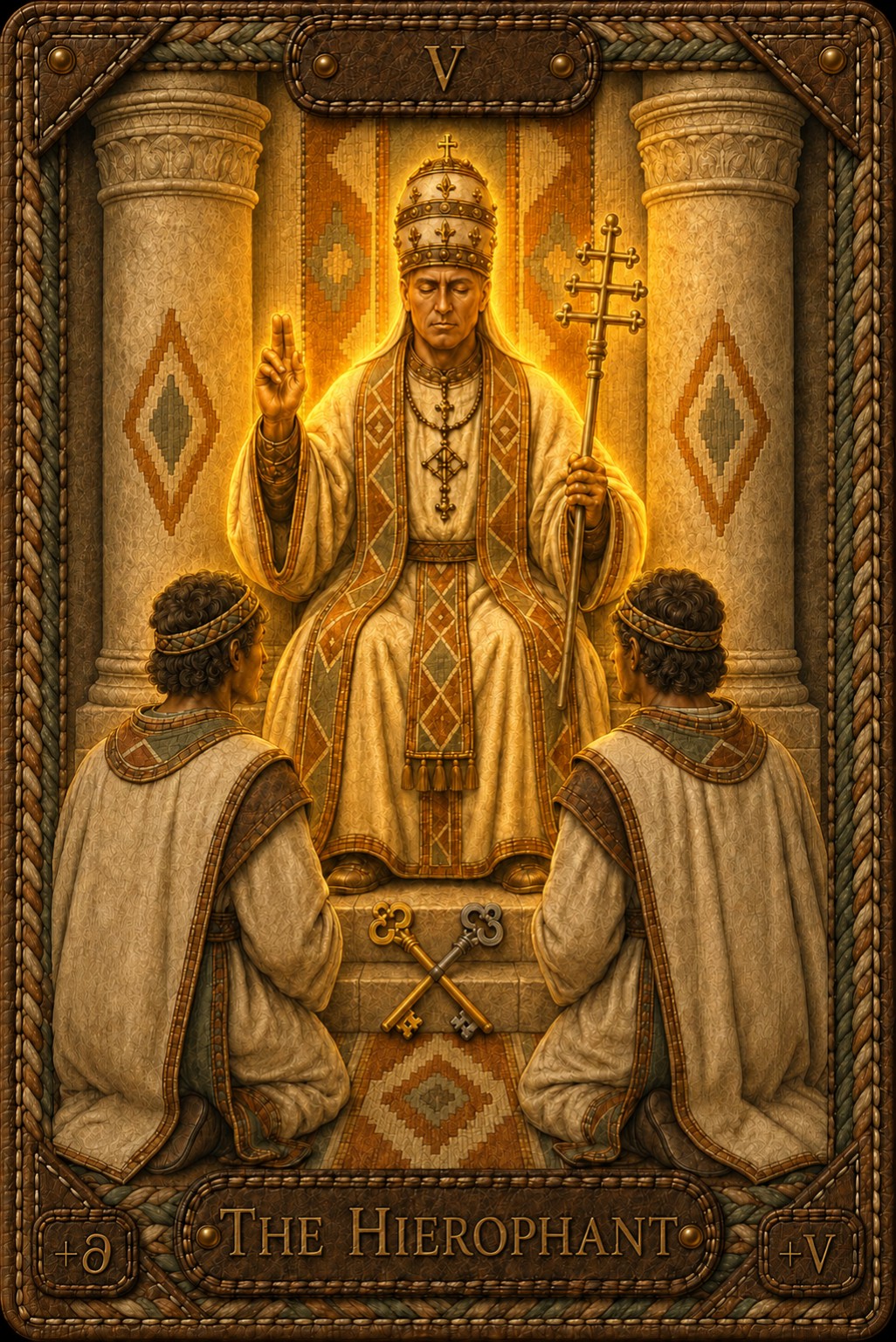
Andreev and popular reference books associate this placement with practical demonstrations and learning by doing. It is easy to picture this language alongside the Hierophant: a master enables the learner to recognise the quality on which the craft depends.
The difficulty comes when a familiar sequence of actions takes the place of knowing how things depend on one another. The apprentice waited the same number of minutes but failed to notice that the starting conditions had changed. Mercury has to ask again: what needs to remain in place if we are to achieve this result another time?
Mercury in Gemini
The language of mirroring
“I find it exhausting, having to remind you all the time,” one person says to another.
“I know. It annoys you that I forget.”
“That’s not quite it. What wears me out is that I’m still the one who has to remember for both of us.”
The difference is small in words and enormous in meaning. The first version seems to be about a poor memory. The second concerns the responsibility for something shared, which has been left entirely with one person. When that distinction is finally heard, she may feel some relief before anything has actually changed.
This is the language of mirroring. Someone hears their understanding returned to them in different words and either recognises their situation or corrects the account. Two independent positions are preserved. One person offers a reflection; the person whose experience is being described retains the right to say whether it is accurate.
The shape of the sentence makes room for that response: “This is what I’m hearing. Is that what you mean?” A declaration—“Now I understand everything about you”—closes off the possibility of correction. A question opens it again. Mercury helps us distinguish what someone is trying to say from what we have already decided they must mean. Agreement and sympathy may accompany the exchange, but the speaker’s own response is what tests the accuracy of our reflection.
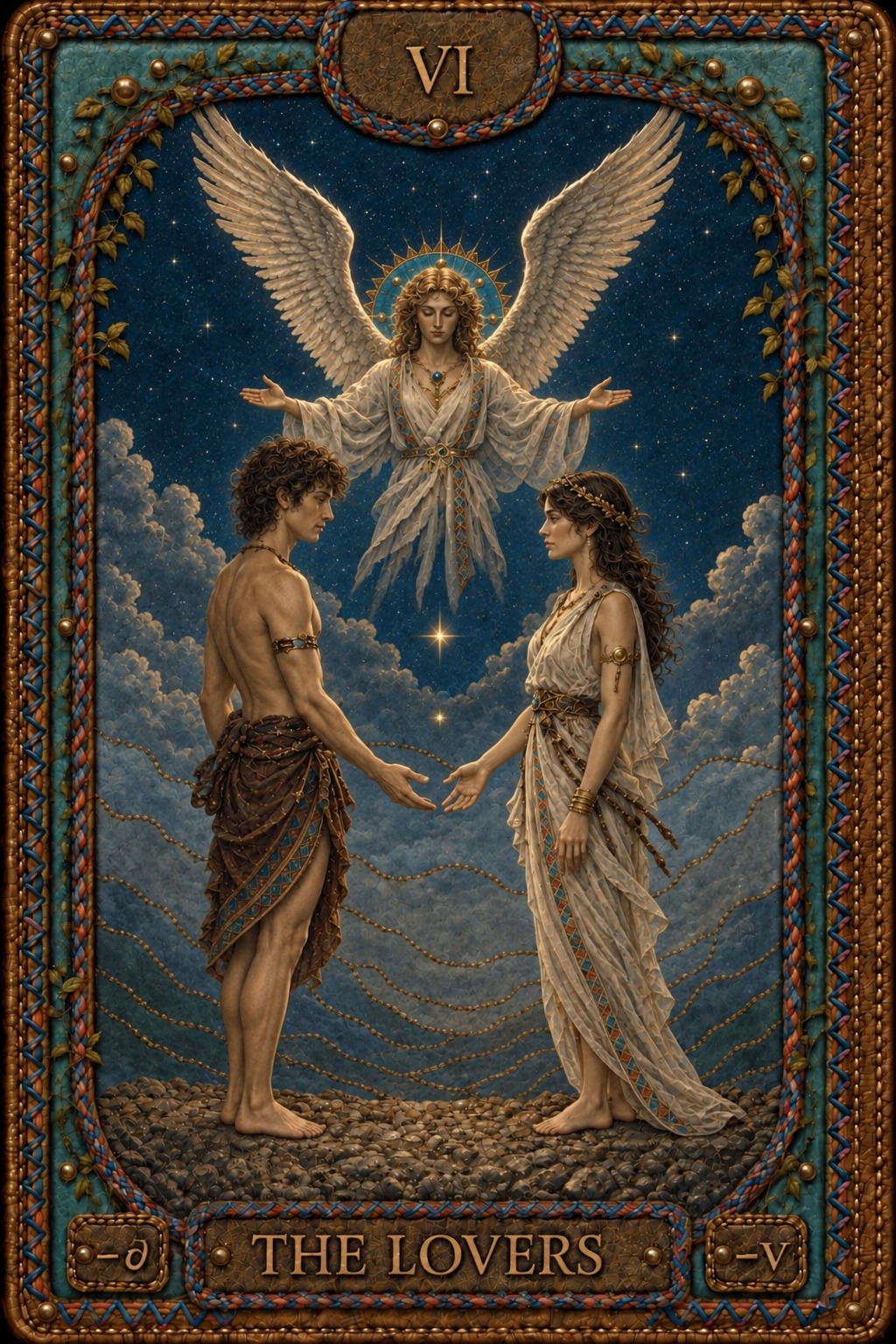
The Lovers draw attention to the space between two people who each have a mind of their own. They may see the same event differently. Conversation gradually makes those views available to each other.
Here we find the familiar themes of dialogue, translation, curiosity and ease in company. Yet Mercurial understanding is not measured by the number of things said. Sometimes its most important step is to sit through a brief silence and let the other person correct our confident account.
Gemini asks: “This is how I’ve understood you. Is that really what you mean?” The answer can change the whole conversation.
Mercury in Cancer
The language of involvement
A family learns that one person’s working hours are changing. At first, the news seems straightforward: from now on, he will get home later. Gradually, a whole domestic story unfolds from that one fact. Who will collect the child? When can they have dinner together? What happens to the evenings they used to think of as time for everyone?
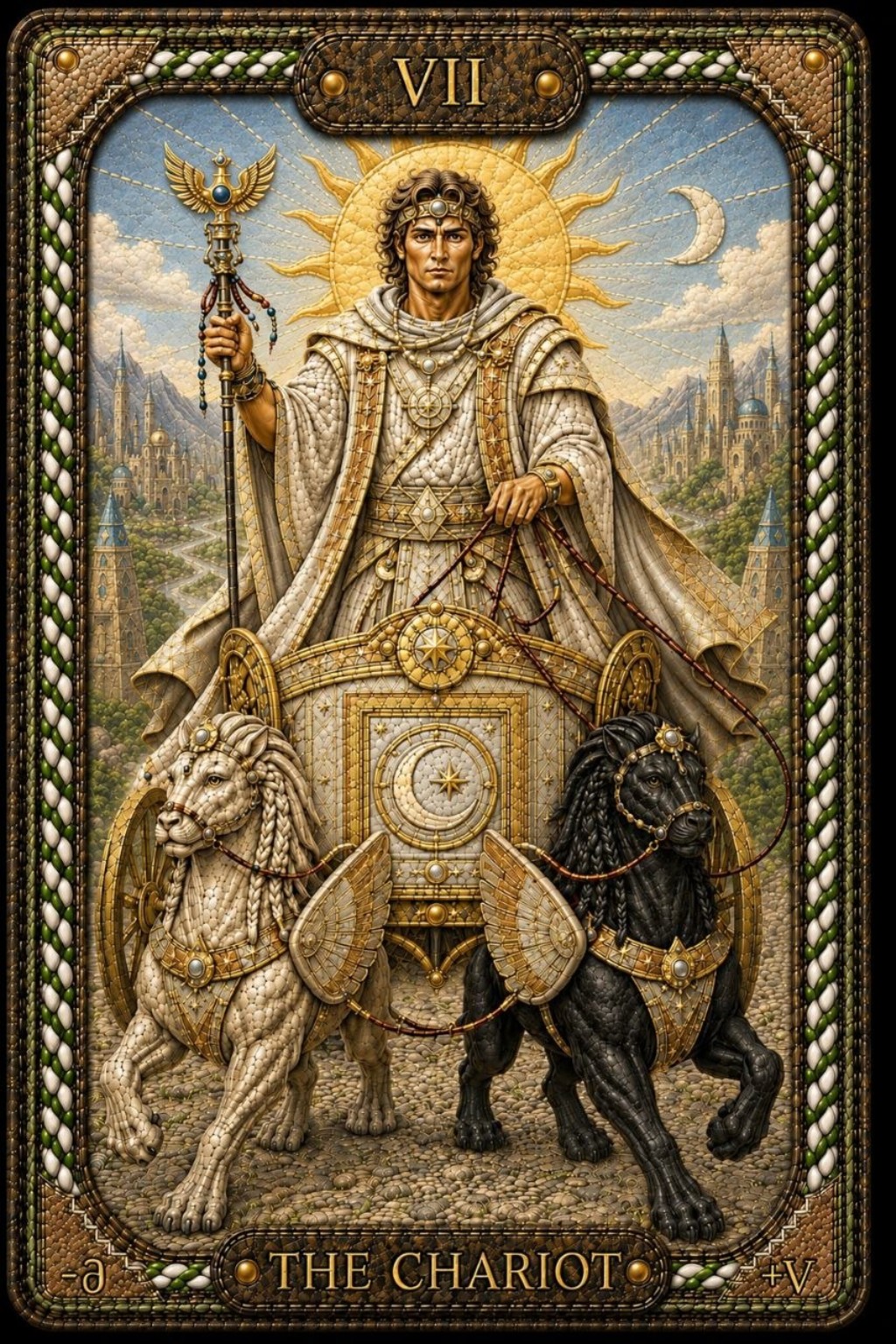
The language of involvement helps us understand how something happening to one person enters the lives of others. The situation is already shared, but it affects each person differently. One will arrive home late. Another will collect the child. Someone else will have to rearrange the time they spend helping with homework. Each person’s involvement comes into view, along with its differences and limits.
You can hear this geometry in the movement from “This is happening to me” to “This is what it means for us”, and then to “Here is the part that affects you”. The shared situation is worked out person by person. It becomes possible to ask: “What do you need from me in particular? What are you counting on? Where does my part end?” A sweeping “This is terrible for all of us” would leave those distinctions unexplored.
Context matters here. A brief “I can’t make it tonight” means different things depending on who is expecting whom, what they have agreed and what has already happened between them. Memory gives the words a depth that cannot be found in any one of them on its own.
This is why popular descriptions speak of emotional memory, sensitivity and attention to personal matters. Those terms become more precise when we can see the person’s involvement in a shared situation behind them.
Alongside the Chariot, we are particularly aware that one person’s movement changes the position of others. Mercury helps explain how. The family still has to get used to its new evenings, redistribute responsibilities and find a suitable response. That is where the work of the Moon and other planets begins.
Sometimes the most important understanding arrives in a simple sentence: “Now I see why this affects you too.”
Mercury in Leo
The language of ownership
A photographer is looking through his work. Some images recall a favourite photographer: similar lighting, the same tilt of a head, a familiar air of ceremony. Others look less impressive, but he keeps returning to them.

He has already noticed that what moves him most are the quiet encounters within a large celebration: two people talking by a window, a child hiding behind her father, someone stepping away from the crowd for a moment. Now he tries to explain what connects these photographs. His friends listen, then find the same interest in new images made in quite a different way.
This is the language of ownership: a person recognises an activity as their own. They can say, “This is my work”, explain what draws them through it, and carry on without someone else’s example. At the next shoot, the photographer chooses a different light and angle, yet can show his friends what he is still looking for. Both he and the people to whom he has explained his interest can recognise the continuity of his work.
Ownership here does not mean owning the photographs or the studio. The photographer can buy someone else’s picture without making its way of seeing his own. He can press the shutter himself and still be copying another person’s example. Our question is whether he can explain what he is looking for in his work and help his friends recognise that interest behind different lighting and new faces. Finding something of his own and making it understood go together, but they need not arrive together. A discovery can remain difficult to explain for a long time.
Here, the geometry connects an activity with the person who carries it forward and takes responsibility for the outcome. You can hear it in a sentence such as: “This is what I’m trying to do. I could change that technique, but this part matters to the work itself.” In Taurus, understanding helped someone else reproduce a result. In Leo, it helps us recognise an independent practice; the next result may look entirely different. Mercury makes intelligible something the person has already recognised as their own.
Strength evokes the ability to gather oneself around a movement of one’s own. Understanding your work helps sustain that movement: you can notice when an expressive technique serves what you have to say and when it begins to obscure it.
Popular interpretations associate this placement with vivid speech, a theatrical flair and the wish for self-expression. But a voice of one’s own can be quiet. Sometimes it becomes audible precisely when a person stops borrowing someone else’s way of sounding convincing.
Mercury’s task remains a specific one: to make clear what comes from the author themselves. Recognition and admiration from an audience are further questions.
Mercury in Virgo
The language of examples
Two wobbly chairs arrive at a workshop. The first has a loose joint. The second stands firm when moved to an even patch of floor. The complaint is the same, but the cases are different.

The apprentice is ready to repeat the repair that worked. The experienced craftsperson first asks them to watch exactly what moves in relation to what. In one chair, the leg shifts in its joint. In the other, the chair moves as a whole in relation to the floor. A distinction that sounded abstract becomes visible. Next time, the apprentice checks it independently, on a different object.
The language of examples makes a general distinction accessible through a particular case. The case has a job to do: it must show what the listener needs to notice elsewhere. Its geometry brings a limited part of the situation into focus, allowing the relevant relationship to be seen without everything else getting in the way.
A useful explanation might run: “Look at what happens here. Now compare it with this. What has changed?” The words direct attention. The listener acquires a way of examining the next case rather than simply a memory of the first two chairs.
An example can also be imagined. “Suppose the floor were perfectly level. Would this chair still wobble?” The question isolates the difference we need, even before anyone moves the chair.
The Hermit’s lamp lights a small area. That limited light can be enough: the explanation succeeds when it illuminates the decisive detail. Naming twenty features of a chair is of little use if none helps distinguish a loose joint from an uneven floor.
This gives the familiar descriptions of Virgo—precision, observation, attention to detail—a practical meaning. The value of a detail lies in what it allows us to tell apart. An abundance of particulars can conceal the point as easily as a vague generalisation.
Mercury traditionally rules both Gemini and Virgo. In Gemini, we check our understanding against the other person: “Is this what you mean?” In Virgo, we check it against another case: “Can you see the same distinction here?” Understanding has to survive the change of material.
For the apprentice, the distinction may feel like a real discovery, even though the craftsperson has recognised it for years. “For the first time” does not yet mean that they have found a previously unknown way of examining such problems. The apprentice has used, for the first time, an understanding someone else has passed on.
Something different happens if the familiar explanation stops helping either of them. They may discover that things they have been putting in one group need to be treated differently, and find a feature they had never taken into account. In distinguishing Mercury from Uranus, it is the emergence of that new way of telling cases apart that matters. Afterwards, what they have found will still need to be explained, tried out in examples and passed on. Thinking can involve both movements. The thrill of discovery alone does not tell us which one has occurred.
Mercury in Libra
The language of criteria
Two people agree to share a room equally. One means the same number of days each week. The other means equal access to the evenings, when the room is actually useful. They both believe the agreement is clear—until they try to make a timetable.

The word “equally” has concealed two different measures. Once someone asks what they are counting, the disagreement becomes intelligible. Equal days and equal evening hours are different criteria. Each can be applied consistently, but they produce different arrangements.
The language of criteria makes the measure itself available for discussion. Its geometry places different proposals in relation to a shared basis of comparison. People may still disagree about the outcome, but they can see where the difference lies and what would count as meeting the condition they choose.
“If by ‘equal’ we mean the same number of evening hours, this arrangement works. If we mean the same number of days, it doesn’t.” The condition matters. It keeps the judgement connected to the measure that supports it and allows another person to apply that measure to a new proposal.
Justice draws our attention to a comparison that can be made openly. Mercury helps those involved say what they are weighing and how. It does not settle every dispute or make everyone willing to accept the result. But the words “fair”, “suitable” or “enough” can now become something more definite than competing impressions.
Popular accounts often speak of diplomacy, tact and the ability to see both sides. Those qualities help a conversation, but a clear criterion may also need to be stated firmly. Keeping everyone comfortable can leave the crucial ambiguity untouched.
In Aries, we asked what had happened and what was beginning. In Libra, we ask how each person understands what they are about to agree on. A shared decision can acquire a definite meaning before it is made. That measure can then be applied to another proposed timetable without beginning the whole argument again.
Mercury in Scorpio
The language of resilience
A craftsperson who has kept a workshop going for years leaves. At first, everything looks much the same. The sign is still up. The tools are in place. The workshop continues to take orders. Life appears to carry on as before.
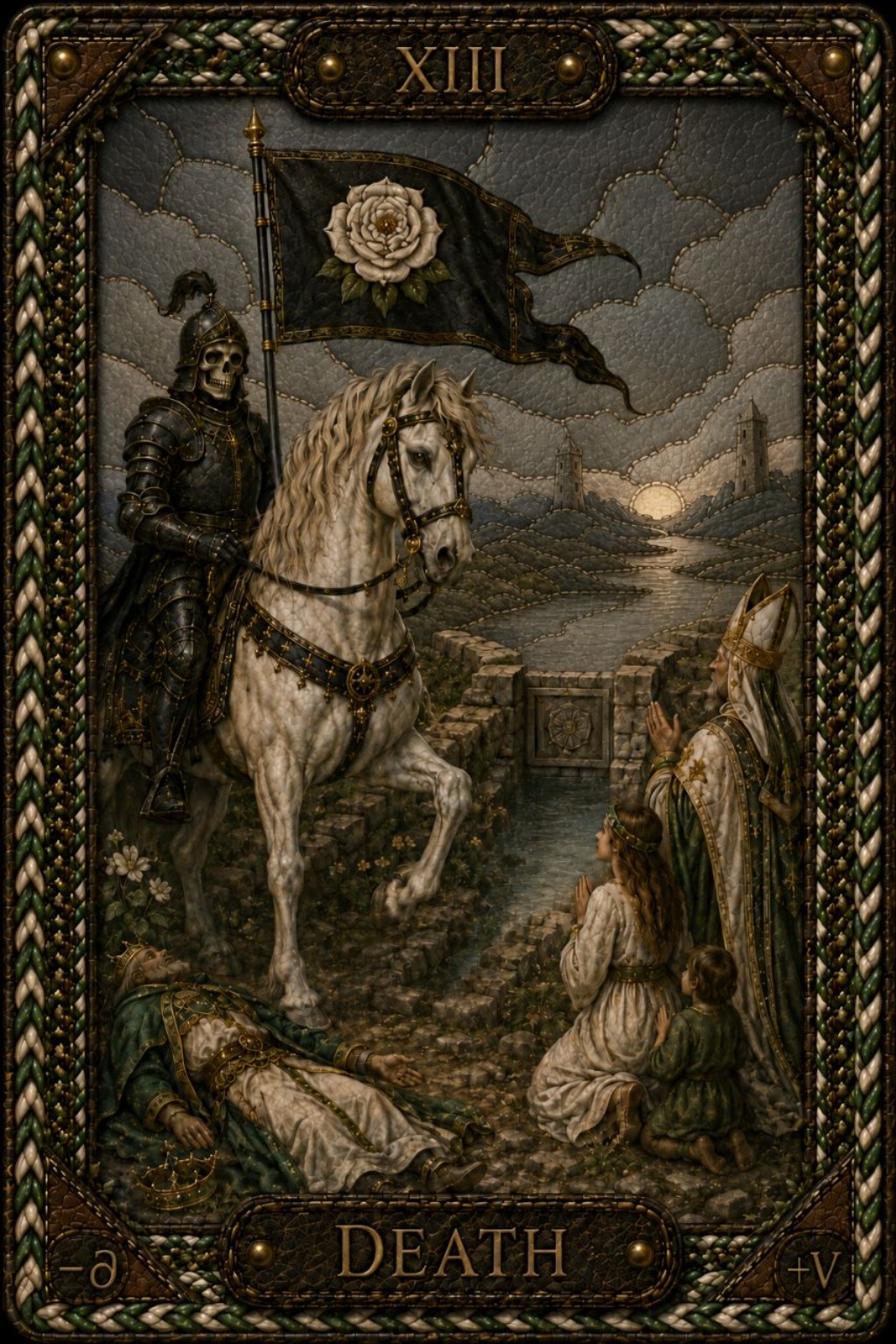
But who can now assess a difficult job? Who maintains the relationships with suppliers? Which tasks can the others perform, and which went well only when their former colleague was there? As people answer these questions, the actual state of affairs emerges from behind the familiar picture.
The language of resilience makes it clear what remains valid under changing conditions and what depended on a former support. The craftsperson’s departure has changed the setting in which the work takes place. People need to understand where they can carry on independently, where they need another approach and which old promises they can no longer keep.
You can hear this geometry in questions such as: “What if they aren’t there?” “What remains true when the usual approach no longer works?” “At what point will we need to reconsider our answer?” Understanding is being tested by a changed environment. Its resilience lies in preserving the essential distinction while recognising, in time, the limits of the previous solution.
The support can also be a prompt. A learner seems to understand while the teacher stands beside them, asking the right questions at the right moment. Remove those questions, and the apparent understanding may disappear. We can test that dependence before circumstances force us to discover it.
Death makes the change unmistakable: a previous way of holding things together has come to an end. Mercury helps explain what that reveals. Penetrating insight, depth and an interest in what is hidden—the familiar popular descriptions—become useful when they expose an actual dependence. Suspicion alone supplies no such understanding.
The people in the workshop may understand exactly what they now lack and still be unable to replace their former colleague. Clarity does not bring back that person’s skills or contacts. The reverse can happen too: the work somehow carries on, although no one can explain what is keeping it going. Mercury is noticeable when the situation has become understandable and that understanding can be shared. Whether the work can continue, and whether the pattern of dependence has changed, remain separate questions.
In Taurus, we identified the conditions needed to reproduce a result. In Virgo, we checked whether a distinction could be recognised in another case of the same kind. In Scorpio, we ask what happens when the conditions themselves change or a familiar support is lost. Resilience becomes understandable through the changes it can withstand.
Mercury in Sagittarius
The language of direction
A writer is exploring how the railway changed life in a small town. The material grows: locomotive specifications, the history of the station, the lives of the engineers. Each fact is interesting, and everything relates to the subject. One day, though, the editor asks: “Where has the change in the town’s life gone?”
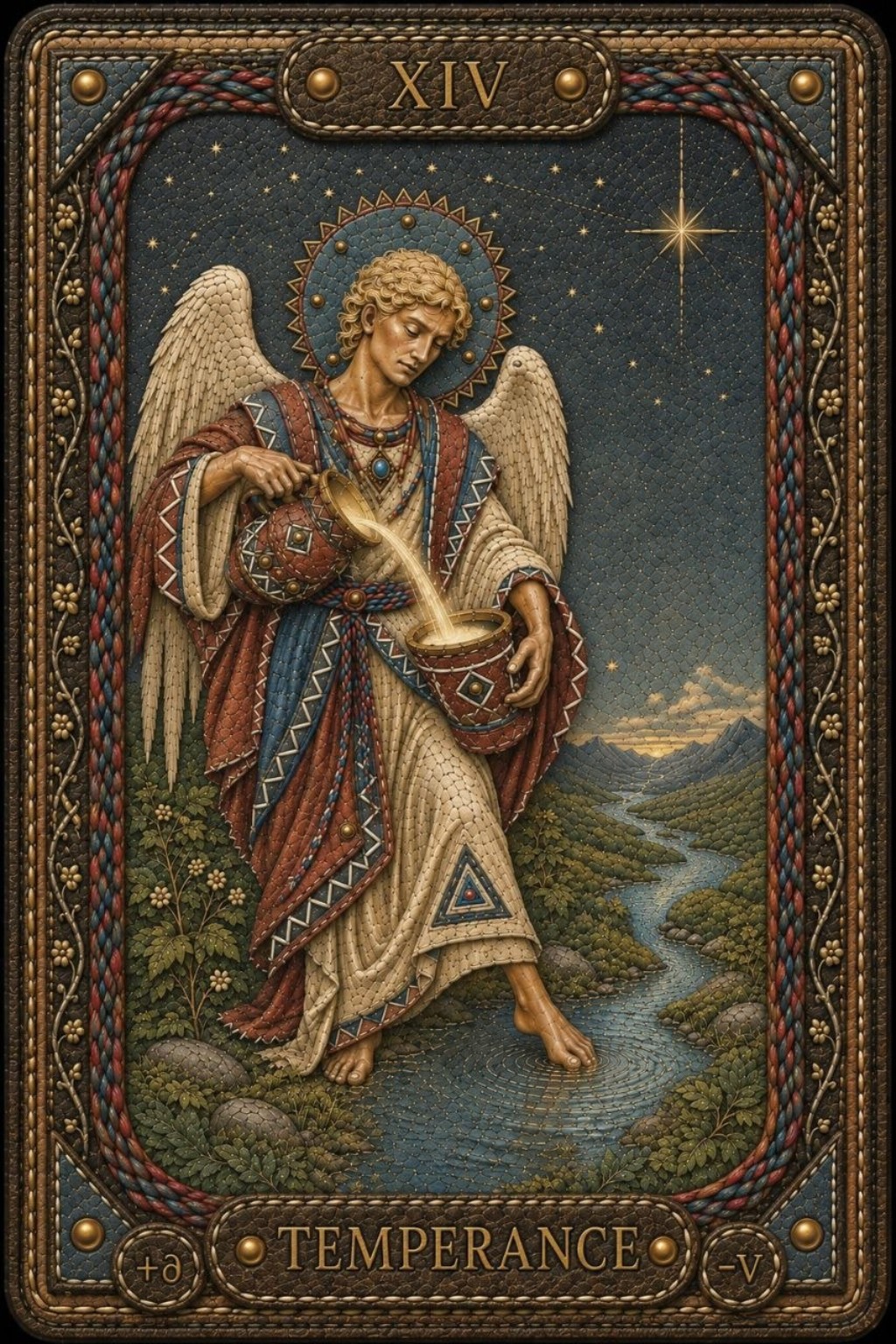
The question restores the direction of the piece. The writer begins to read the material differently. One technical fact explains why goods became more readily available. Another changes nothing in the chosen story and remains an interesting aside. The writer now has an understanding that can be brought to the next, as yet unfamiliar, document.
The language of direction makes an existing line of enquiry intelligible. Its geometry connects the present point with the possible continuations ahead. It helps someone understand why one next step belongs to the enquiry while another would take it elsewhere.
The editor has conveyed something useful if the writer can assess a newly discovered document without asking for another verdict. Does it deepen the question the book is pursuing? Does it open a necessary turn in the story? Or is it a fascinating fact that belongs in a different book?
A reference to the future does not, by itself, establish direction. “We’ll carry on tomorrow” leaves the next step entirely open. “We’re following how the railway changed everyday life, so this letter may matter more than another engine specification” gives the writer a way to choose when the next fork appears.
Temperance, pouring from one vessel into another, evokes a continuation in which each step must be brought into relation with what is already under way. Sometimes a correction is needed: the earlier wording had quietly been leading us elsewhere. Mercury helps make the direction clear enough for someone else to continue.
Popular descriptions speak of breadth of vision, big ideas and a taste for generalisation. A wider view can help us find our bearings. It can also become a ready-made conviction into which every fact must fit. A direction remains useful while it allows us to encounter new material and judge where it leads.
Gemini asks, “Have I heard you correctly?” Sagittarius adds, “And where does that take us?”
Mercury in Capricorn
The language of configurations
A group has already settled on its project: a library where local people can find, borrow and return books, and meet to discuss their reading. For now, it exists in conversations and on a few sheets of paper. Some people picture shelves, others a reading room, others meetings with authors. The project has its boundaries; the place of each part within it still needs explaining.
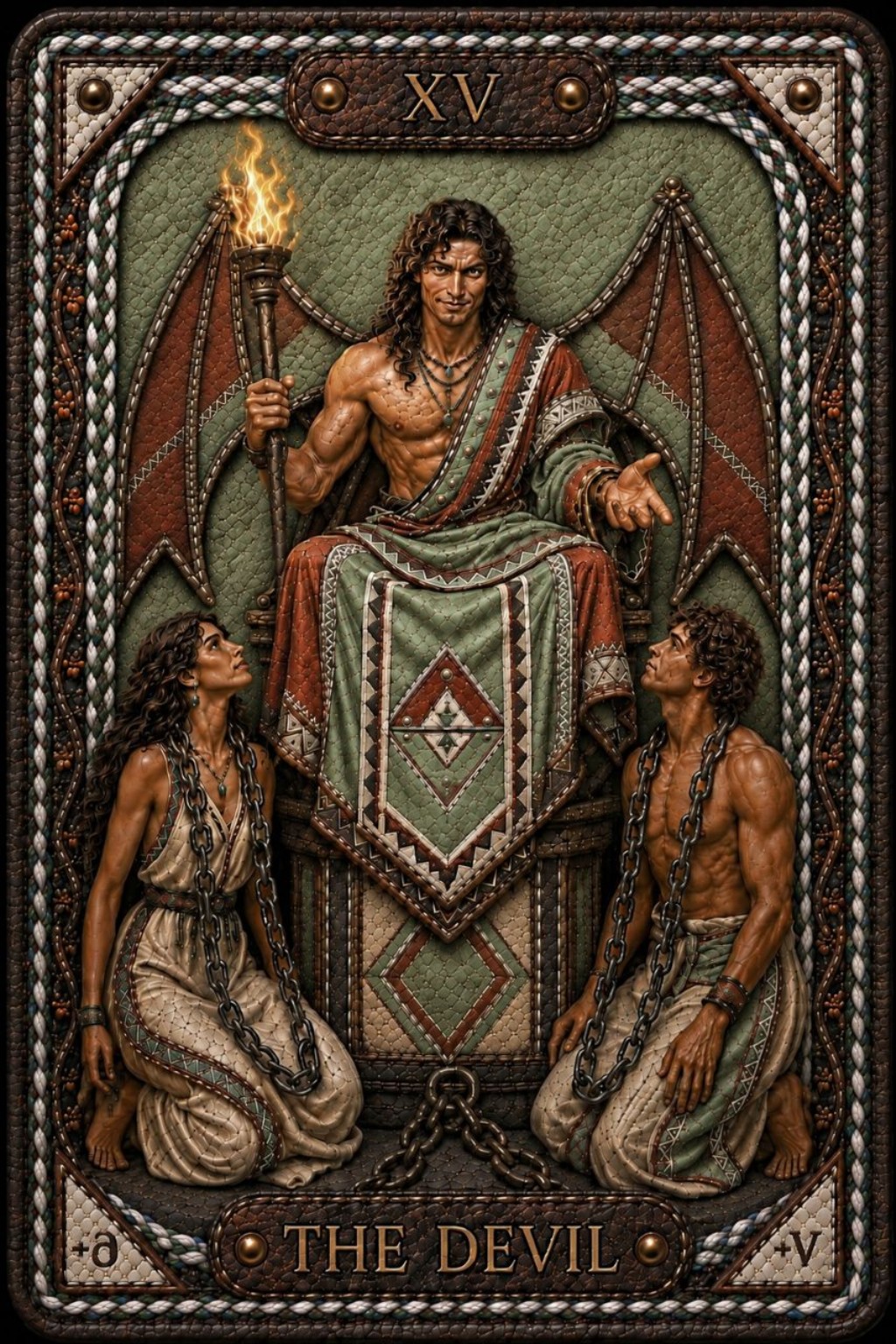
Someone suggests following a reader’s imagined journey. How will they find out whether a book is available? Who can locate it? Where is it issued? What needs to happen before it becomes available to the next reader? Relationships come into view. If the catalogue is kept separately from the lending records, it will give the reader the wrong answer. If events occupy the only space where the collection can be worked on, one activity will repeatedly interrupt another.
The language of configurations makes the relationships within an already defined undertaking understandable. Its geometry concerns the positions of parts within a whole: what depends on what, what one change will displace, and which other decisions it will require.
“If we put the desk here, readers will pass through the work area. If we move it there, the librarian will lose sight of the entrance.” Such sentences allow someone else to consider another layout and explain its consequences. The understanding travels beyond the original proposal.
Mercury is explaining an undertaking whose boundaries are already in place. The decision to make this a library, and what kind of library it is to be, belongs to other work. Here, people learn to recognise how a particular arrangement serves the whole they have already chosen.
To check the understanding, people need to be able to describe the same undertaking and explain where a new decision fits within it. Agreement about the next action is not enough: the same action can fit two very different conceptions of the project. A meeting room may be central to one library’s purpose and a welcome addition to another. We need to know which whole we are considering and where the decision sits within it.
The Devil brings dependencies and binding connections into view. Popular accounts describe this Mercury as practical, organised and concerned with structure. Those qualities matter when they help a person explain an arrangement and the consequences of changing it. A tidy list alone does not show how the undertaking holds together.
Saturn may be visible in the boundaries and obligations of the work; other planetary functions enter into making it happen. Mercury’s contribution is that someone else can now look at the same project, understand its dependencies and reason through a new arrangement.
Mercury in Aquarius
The language of commonality
Repair workshops open in different towns. In one, an expert quickly fixes a visitor’s appliance. In another, the visitor works alongside the expert. Both workshops can report a successful repair. Yet the organisers want to convey a further distinction: when does someone leave with a working object, and when do they also gain some understanding of how to look after it?

That distinction can belong to many independent workshops. Each has different tools, visitors and habits. The explanation must be clear enough for people elsewhere to recognise the same relationship without the original author standing beside them.
This is the language of commonality. Its geometry extends across separate undertakings. It makes something they share available to people who do not share a room, a history or an organiser.
A slogan such as “Always let visitors hold the tools” would be too narrow. A visitor with a disability may be unable to do that, yet follow the diagnosis, understand the repair and learn what to notice next time. Someone else may hold a screwdriver throughout and leave with no idea what happened. The shared distinction has to survive these differences.
Mercury has succeeded when another workshop can explain a new case in its own circumstances, while preserving what the original distinction was meant to show. The author’s absence becomes part of the test. Does the explanation still work when no one can turn round and ask, “Is this what you meant?”
In Libra, the people comparing their judgements can still clarify a shared criterion together. In Aquarius, understanding has to travel between independent settings. The Star suggests a point of reference that remains available to people in different places.
Popular interpretations emphasise originality, unusual connections and independent thinking. An unfamiliar idea becomes useful to others when they can understand what it brings into relation. Being unusual is only the beginning of that task.
Capricorn made the arrangement within one undertaking intelligible. Aquarius helps us recognise something shared across several undertakings, each of which continues on its own.
Mercury in Pisces
The language of reconstruction
A researcher is trying to understand an old theatre production. Little remains: an annotated script, a few letters and part of a rehearsal recording. In the script, one character says, “Come.” What did the line mean on that stage? An invitation? A demand? A hesitant plea for someone to stay close?
The line alone leaves many possibilities open. The recording preserves a fragment of intonation. A letter discusses this particular moment. A note in the margin clarifies the pause. Gradually, the traces begin to support a particular reading: in that production, the line was a plea for someone to stay close.
The language of reconstruction helps make an incomplete whole intelligible through the traces it has left. Its geometry joins fragments, gaps and possible continuations. An absent part is understood through its relationship with the parts we can still see or hear.
This asks for more than an attractive story. “If the line were a straightforward invitation, this pause would be hard to explain. The letter points towards a different situation.” The explanation shows why one reconstruction accounts for the evidence better than another, and where uncertainty remains.
Mercury makes that reasoning available to someone else. A second researcher can consider another fragment and work out whether it supports the reading or requires it to change. It remains essential to distinguish what the surviving material shows from what we have inferred to connect it.
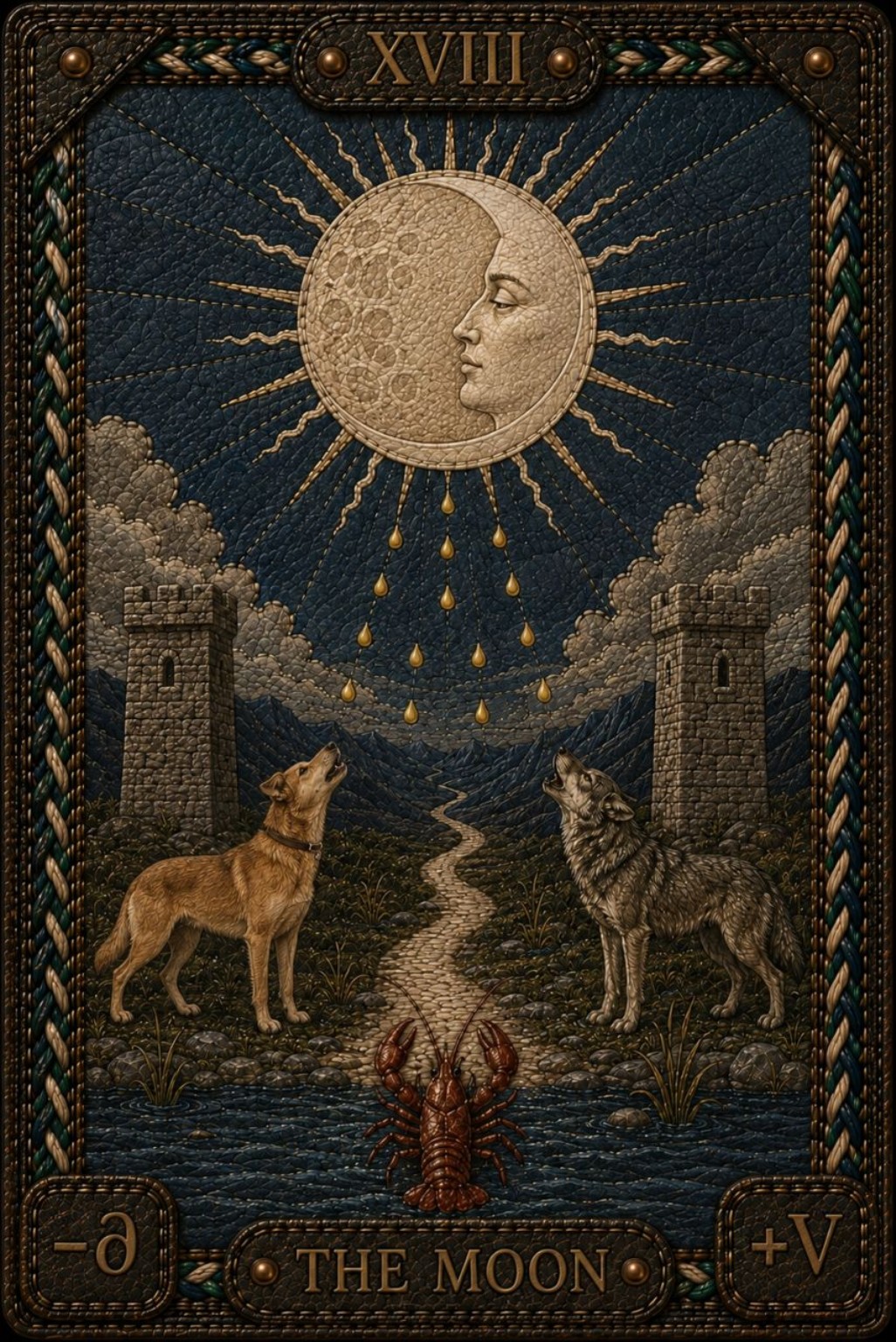
The Moon gives the scene its uncertain light, in which it is easy to think we can see more than is actually available. Imagination helps join the fragments and can quietly fill the gaps for us. A careful reader may have to say: “We can understand this much. Here, several possibilities are still open.” Andreev and popular descriptions associate this placement with musicality, imagery and sensitivity to subtext. Precision is possible in this register too: it concerns what we have actually been able to hear in an incomplete expression.
Neptune might become visible if the old production found a continuing life in a new one. Mercury is at work when we understand how a particular line was heard within the earlier performance. One concerns the continuation of a life in art; the other makes a particular meaning accessible through what remains.
Mercury can also help us understand the whole play: the relationships between the characters, the way the action unfolds, the meaning of its silences. The amount we understand does not draw the boundary between Mercury and Neptune. We may explain an old production in great detail and never find a way to give it a new life. Or we may carefully carry on a familiar theatrical practice while still struggling to explain it to someone else. In one case, we ask what has become understandable; in the other, what has continued in a different form. A successful translation can do both.
When We Can Put It in Our Own Words
The stories differ, but each returns to the same test. Has the other person acquired a way to make the distinction themselves? Can they recognise the event’s status, judge a new batch of dough, correct a reflection, understand their part in a shared situation, or follow the evidence in an incomplete story?
The world continually asks us to express understanding in new forms. People speak different languages. Words take on different shades of meaning from one situation to another. Things look alike yet differ in what matters. Even a thought we wrote down yesterday may need translating today.
Sometimes that translation takes a second. Sometimes people work at it for years: searching for the right word, explaining a difficult subject to pupils, rereading documents, returning to a conversation in which they once failed to understand each other.
Hermes carries the possibility of deception with him. Words can conceal a substitution, and an elegant account can lead us astray. Yet his gift is also the possibility of sharing something that, until the conversation began, only one person could see.
Marina listens to her pupil playing a new piece. He stops in the right place, looks up and tries to explain what he has heard. His words are quite different from hers.
She does not need to correct him. He can put it into words himself now.